
La Quinta's Regional Directory Shelf
The first La Quinta task is to identify what actually exists. NARA lists Riverside city volumes, but the inventory does not promise La Quinta coverage. The local La Quinta historic surveys are not city directory books, yet they offer address-to-person context that can fill a modern directory gap. Library, Museum, newspaper, census, deed, and archive records each cover a different slice of La Quinta time.
| Collection | Years | Where Held | Access and use |
|---|---|---|---|
| NARA Riverside directory volumes | 1927, 1929-1934 | NARA microfilm inventory | Verify whether the volume reaches eastern county |
| La Quinta Historic Resources Surveys | 1997, 2006, 2012, 2022-23 | City Historic Preservation | PDFs, era maps, tables, DPR forms |
| La Quinta Library and RCLS | 1976-present branch service | Library catalog and reference shelves | Ask for exact title, year, and scope |
| Museum and Historical Society | Settlement through modern city | Local collections | Photos, documents, oral history, provenance |
| California Digital Newspaper Collection | Historical California papers | UC Riverside CDNC | OCR search, then inspect page image |
| Federal census | Through 1950 public | NARA, FamilySearch, libraries | Enumeration geography must be confirmed |
| Sanborn fire-insurance maps | No La Quinta edition verified | LOC and library databases | Search exact place; absence has limits |
This coverage table is the practical heart of a La Quinta directory search. A collection belongs in the workflow only after its geographic claim is checked.
La Quinta's NARA Directory Years
The National Archives inventory for circa-1930 Riverside volumes lists years from 1927 through 1934. That is a real year run, but it is not proof that a La Quinta address appears in each La Quinta volume. La Quinta was not incorporated until 1982, and a rural route, ranch, tract, resort, or nearby community may be indexed under a different place name.
Use the NARA city-directory inventory to identify the La Quinta film or collection. Then verify the volume’s front matter, city limits, street index, and place abbreviations. A La Quinta directory entry should be cited with edition, page, and the precise geographic label used by the publisher.
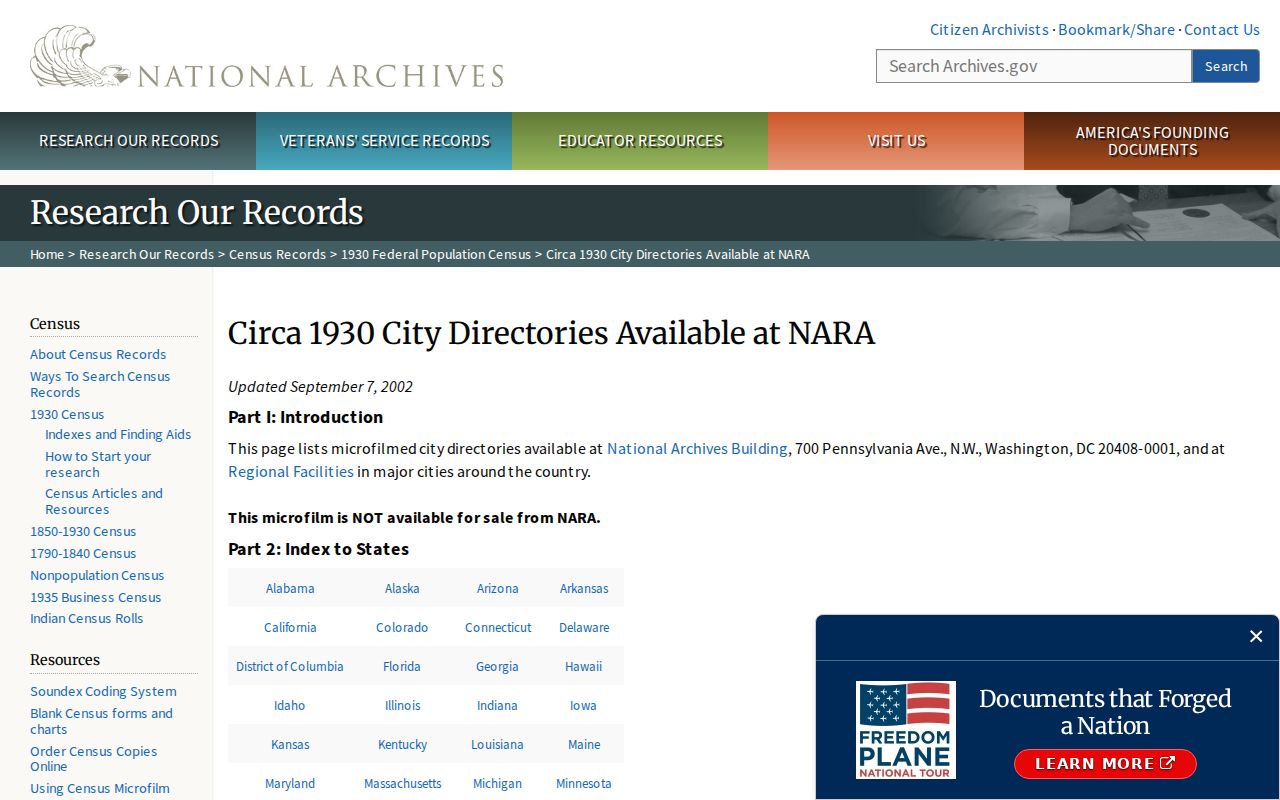
The NARA image is a finding aid, not a local La Quinta household result. It helps set an honest boundary around what the regional La Quinta directory shelf can establish.
Note: A Riverside title or year is not proof that a directory volume includes an address in La Quinta.
La Quinta City Directory Bookmobile Story
Local La Quinta library history explains why a long, city-specific shelf should not be assumed. Riverside County Library System service began in March 1976 as a morning bookmobile stop in the Village, now Old Town. County and city funding opened a La Quinta branch in 1988. That first branch measured 2,000 square feet, held 8,900 items, and opened 20 hours each week.
The timeline points La Quinta researchers toward regional telephone and directory collections rather than an invented pre-incorporation municipal run. The official La Quinta library history is a starting point. Ask staff whether a title is in reference storage, on microfilm, in a licensed database, or available at another RCLS branch.
| 1976 | Bookmobile service begins at the Village stop |
|---|---|
| 1982 | La Quinta incorporates as a city |
| 1988 | County and city funding opens the first branch |
| 1997 | First citywide historic survey identifies eligible sites |
| 2006 | Survey update adds annexed areas and eligible properties |
| 2012 | Grant-supported survey consolidation improves access |
| 2022-23 | Updated context, maps, tables, and DPR forms are published |
The bookmobile-to-branch story is a useful La Quinta clue about the age and regional nature of the La Quinta directory shelf.
Ask for La Quinta Directory Holdings
No official library page located in the research publishes a La Quinta-specific city directory shelf list. The correct response to that La Quinta gap is a precise holdings request. Give the branch a family name, street or tract, date range, and record type. Ask for publisher, edition year, call number, branch, geographic scope, whether the item is reference-only, and whether a scan or transfer is possible.
Search the RCLS catalog by place and by title phrase: Coachella Valley, Indio, Palm Springs, Riverside County, telephone directory, city directory, and criss-cross. A title record alone is not enough. The edition’s own introduction may reveal that the named place is a business district, a postal area, or a city that did not include the La Quinta parcel.
If the library has no La Quinta match, ask the La Quinta Museum or Historical Society about finding aids, donated documents, reproduction fees, appointments, and citation format. Donated material may have access limits even when the La Quinta institution is public-facing.
Reading a La Quinta Directory Entry
A historical La Quinta city directory entry is a compact record with publisher-specific abbreviations. It may be alphabetized by surname or organized in a street section. Read the La Quinta page image, not only a search snippet. OCR can lose initials, Spanish surname particles, punctuation, and diacritics.
- Surname and given name, including a middle initial or alternate spelling
- Spouse in parentheses, widow notation, or a household cross-reference
- Occupation, employer or business address when the edition prints it
- Residence address, telephone, and occupancy mark when supplied
- Street-section entry ordered by street name and house number
- Abbreviation key at the front of that particular volume
- Householder index
- An alphabetical section that points to a named household or principal entry.
- Criss-cross directory
- A reverse section that starts with a street and number, then lists a subscriber or occupant.
- Abbreviation key
- The publisher’s definitions for marks and short forms. Meanings can change by year.
- Index versus image
- A searchable transcription may miss a line. The page image is the source to inspect and cite.
Note: The La Quinta abbreviation key belongs to its own edition because publishers can change short forms, spacing, and household conventions over time.
La Quinta Criss-Cross Street Clues
A La Quinta criss-cross section can move a family-history search from an address to a listed name. It is not the same as the modern La Quinta street directory. Telephone subscriptions omit many people, names can be stale, and a La Quinta business or resort address can sit beside a household entry. Record the exact edition before treating the line as evidence.
Use the La Quinta section in this order: street name, house number, printed name, telephone or business mark, and page citation. Compare adjacent years for arrival, departure, or a changed spelling. A rural route, tract lot, resort property, private road, or condominium unit may use a format that does not match a current La Quinta street number.
The modern La Quinta address chain belongs on the La Quinta by-street page. The city directory page remains the place to test whether an older reverse volume actually covers the address.
Trace La Quinta Directory Families
La Quinta directory evidence becomes stronger when paired with a census year and a property or newspaper clue. A directory is a local snapshot. A census schedule is a decennial household snapshot. A deed follows La Quinta land. A newspaper may connect a person to an event but needs corroboration.
- Write down a known La Quinta year, name, address, spelling, spouse, occupation, and source page.
- Check both the alphabetical and street sections of the same volume.
- Compare the nearest editions for an arrival, departure, address change, or household shift.
- Pair 1930, 1940, or 1950 directory clues with the matching census schedule and enumeration place.
- Bridge after 1950 with deeds, newspapers, yearbooks, permits, and library-confirmed telephone volumes.
A person later associated with La Quinta may have been counted under an unincorporated township or nearby community. Ages, relationships, and spellings can contain errors. Mark each La Quinta source as a clue, confirmation, or unresolved lead.
Historic Surveys Fill La Quinta's Directory Gap
La Quinta’s Historic Resources Surveys are a modern substitute for some questions a La Quinta directory cannot answer. The 1997 survey found 72 eligible sites. The 2006 work added 183 surveyed sites, with 109 eligible. A 2012 grant-supported consolidation made the information easier to use, and the 2022-23 La Quinta update added a context statement, era-neighborhood maps, tables, DPR forms, and proposed districts.
La Quinta survey forms can name a construction era, architectural style, tract or development period, architect, builder, and historically significant associated people. They do not serve as a list of present occupants. Mine the La Quinta Historic Preservation resources address by address, then compare the result with permits, deeds, newspapers, Museum material, and the Historical Society.
Note: Historic survey associations add context to a La Quinta address but do not establish a current household or owner.
Unclaimed Property Is Not a City Directory
La Quinta name-based searches can produce tempting side trails. California’s Controller maintains an unclaimed-property search that can return a reported name, city, holder, and property clue. Property generally reaches the state after dormancy, commonly three years, and new names are added continually. A La Quinta match is only a lead. A claim requires proof, and a city name does not prove residence at the time of the original account.
Use the official California unclaimed-property service rather than a letter or intermediary that claims special access. Compare name, middle initial, prior city, relatives, or a dated La Quinta address with an independent record. This keeps a La Quinta city directory search from treating an administrative clue as household proof.
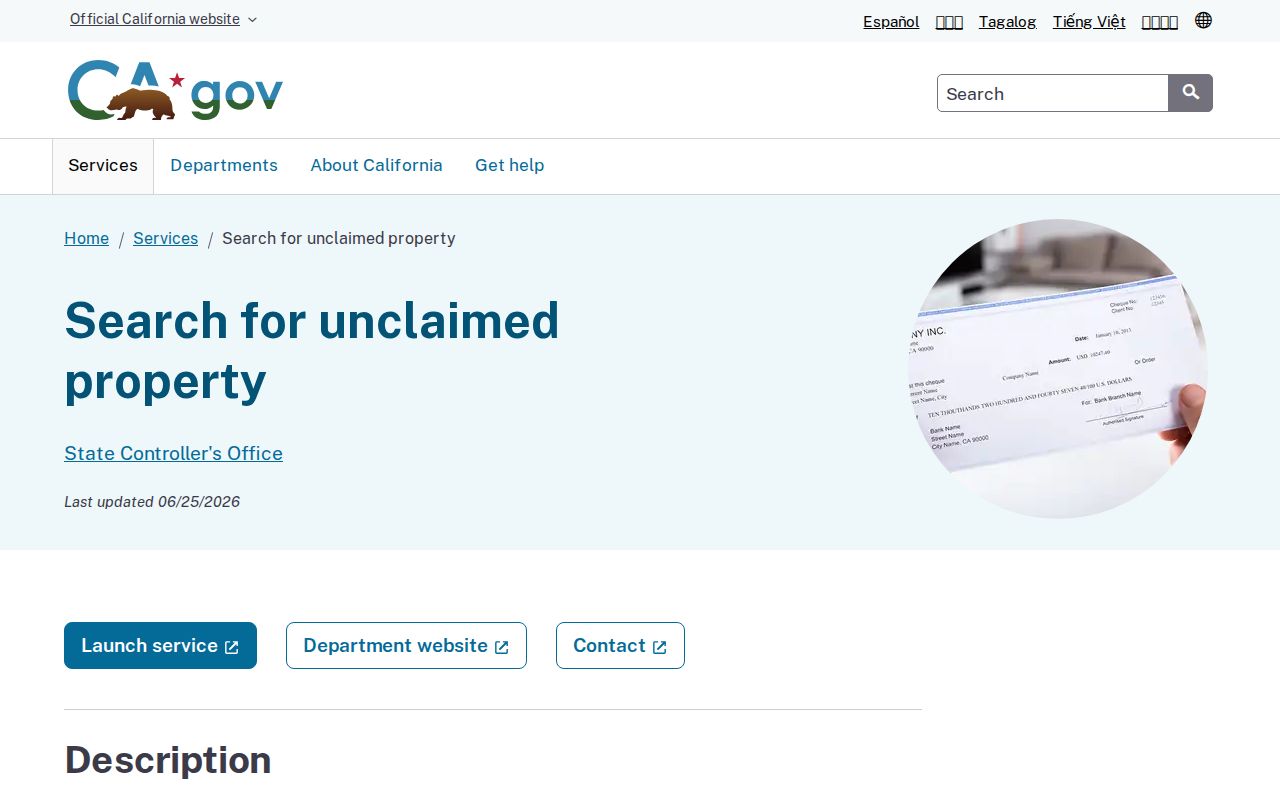
The state service is a useful La Quinta comparison point because it shows how a name and city can be a clue without being a directory entry.
La Quinta City Directory Name Search
La Quinta name searches through engines and OCR do not always preserve a person’s name. Try marked and unmarked forms, surname particles, compound surnames, initials, and likely punctuation changes. California began supporting specified diacritical marks on vital records under 2025 legislation, but older La Quinta indexes may omit them. A clean result can be a false negative.
The California Digital Newspaper Collection and Calisphere were among the sources used in La Quinta’s official survey. Search an exact surname, a street or tract, La Quinta Resort, a community group, or a broad date range. Then inspect the newspaper image and compare the clue with a La Quinta deed, permit, census schedule, directory page, or obituary.
Sanborn Absence Has a Local Meaning
No La Quinta-specific Sanborn fire-insurance map edition was verified. That absence matters because Sanborn mapping focused on built-up places, while La Quinta’s early history included rural, agricultural, desert, and resort settlement. It does not mean that no La Quinta building existed. Permits, aerials, tract maps, and historic-survey forms are stronger local substitutes.
Use the Library of Congress Sanborn search guidance to search California and nearby place names. Do not substitute a Los Angeles or Riverside sheet for a La Quinta address. Note the exact place, edition, sheet, and coverage before treating a map as house-history evidence.
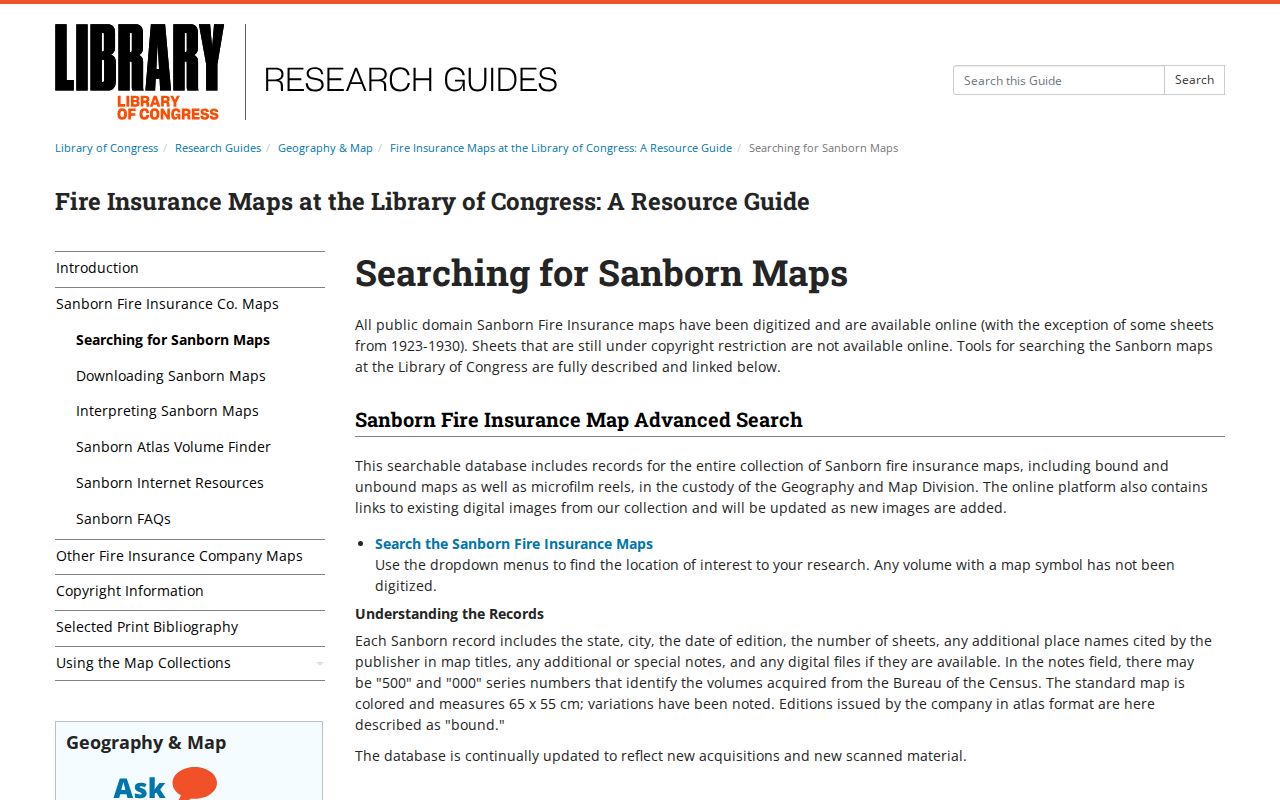
A missing La Quinta map run is a research result, not an invitation to fill the gap with an unrelated city.
Note: A missing Sanborn sheet is a research limit, not evidence that a La Quinta structure or business never existed.