
La Quinta Previous Residents: Source Years
One La Quinta address can have several histories. Deeds follow title. Permits date work. Historic surveys explain a La Quinta building’s era and associations. Directories and census schedules can show a household at a point in time. Probate and obituaries may explain where a former owner or family ended up. The La Quinta year range is as important as the source name.
| Source | Years it covers | Where held | What it shows |
|---|---|---|---|
| La Quinta recorder web index | 1974-present | Riverside ACR Self-Service | Named parties, document chain, copy ordering |
| Earlier La Quinta deed books and indexes | 1893-1973 county era; earlier predecessor records | ACR and Robert J. Fitch County Archives | Grantor-grantee chain and legal description |
| Clerk documents | Indexed series from 1893-present | Riverside ACR | Marriage, FBN, environmental and clerk records |
| La Quinta building permits | Exact start not published | La Quinta Design and Development | Construction and alteration chronology |
| Historic surveys | 1997, 2006, 2012, 2022-23 | La Quinta Historic Preservation | Era, style, builder, tract, associations |
| La Quinta census schedules | 1850-1950 public | NARA, FamilySearch, libraries | Household at enumeration place |
| La Quinta regional directories | Exact La Quinta years unverified | RCLS or Museum | Listed occupant, phone, or address if covered |
| Probate and obituaries | Case or publication date | Riverside court, newspapers, archives | Heirs, relationships, endpoint clues |
This La Quinta era table keeps a previous-residents search from treating a modern web cutoff as the start of the property’s history.
Note: The La Quinta source year range must be written beside every name before a previous-residents conclusion is drawn.
Start With La Quinta Address and Owner
Begin with the La Quinta address in ACR Property Search and save the APN. Riverside’s public web assessor deliberately withholds owner names, so the next step is an ACR public-service office, computer, or microfiche channel. Ask for the current assessed owner and the acquisition document number. Confirm the current office location and hours on the ACR locations page before traveling.
The La Quinta owner name is a bridge, not the end of the search. Carry it to the recorder’s name search, then compare the deed’s legal description and recording date with the APN. This is the opening move for a previous residents search. An owner’s mailing address may be elsewhere, and a current La Quinta owner may not have occupied the property.
The La Quinta office-location source represents the in-person step that the online APN search cannot replace.
Trace La Quinta Past Owners Through Deeds
A La Quinta chain of title is the sequence of recorded transfers connected to one parcel. A grantor transfers an interest. A grantee receives it. The deed image may carry the legal description, seller, buyer, execution date, recording date, and document number even when the La Quinta street address is absent or incidental.
Current APN → ACR owner channel → acquisition deed → prior grantee → earlier deed book.
- Obtain the current La Quinta APN and owner through ACR’s office channel.
- Find the current La Quinta acquisition deed and write down the grantor, grantee, dates, document number, and legal description.
- Search that seller as a grantee in earlier recorder entries, narrowing by date and document type.
- Confirm the same lot, tract, map, APN, or legal description before stepping farther back.
- Ask ACR or County Archives for pre-1974 books, indexes, microfilm, and map books when the web chain ends.
Official La Quinta copies can be ordered online, by mail, or in person. The Riverside recorder charges $8 for the first page, $1 for each additional page of the same document, and $2 for certification per document. The copy portal warns that completed-copy charges are nonrefundable. A previous residents trail should cite the document, not merely a name hit.
Use the Riverside record-copy instructions when the La Quinta index has identified the document. A previous residents search should cite the document, not merely a name hit.
The La Quinta copy-ordering view reinforces the difference between a free index and a paid record image or certified copy.
Note: A recorded transfer follows title, not necessarily the household living at a La Quinta parcel during that period.
La Quinta Address History: The 1974 Cutoff
Riverside’s recorder public web index for La Quinta begins January 1, 1974. The county’s environmental and clerk-document search advertises indexed clerk documents from January 1, 1893. Those La Quinta dates must not be conflated. The 1893 clerk coverage does not establish that all deeds or deed images are online back to county creation.
Use the Riverside clerk and environmental document search for its own La Quinta fields: filing-date start and end, name or title, document number, and exact or wildcard matching. Exact matching is order sensitive; wildcard word order is not. For earlier La Quinta land records, ask ACR or the Robert J. Fitch County Archives about original books and microfilm.
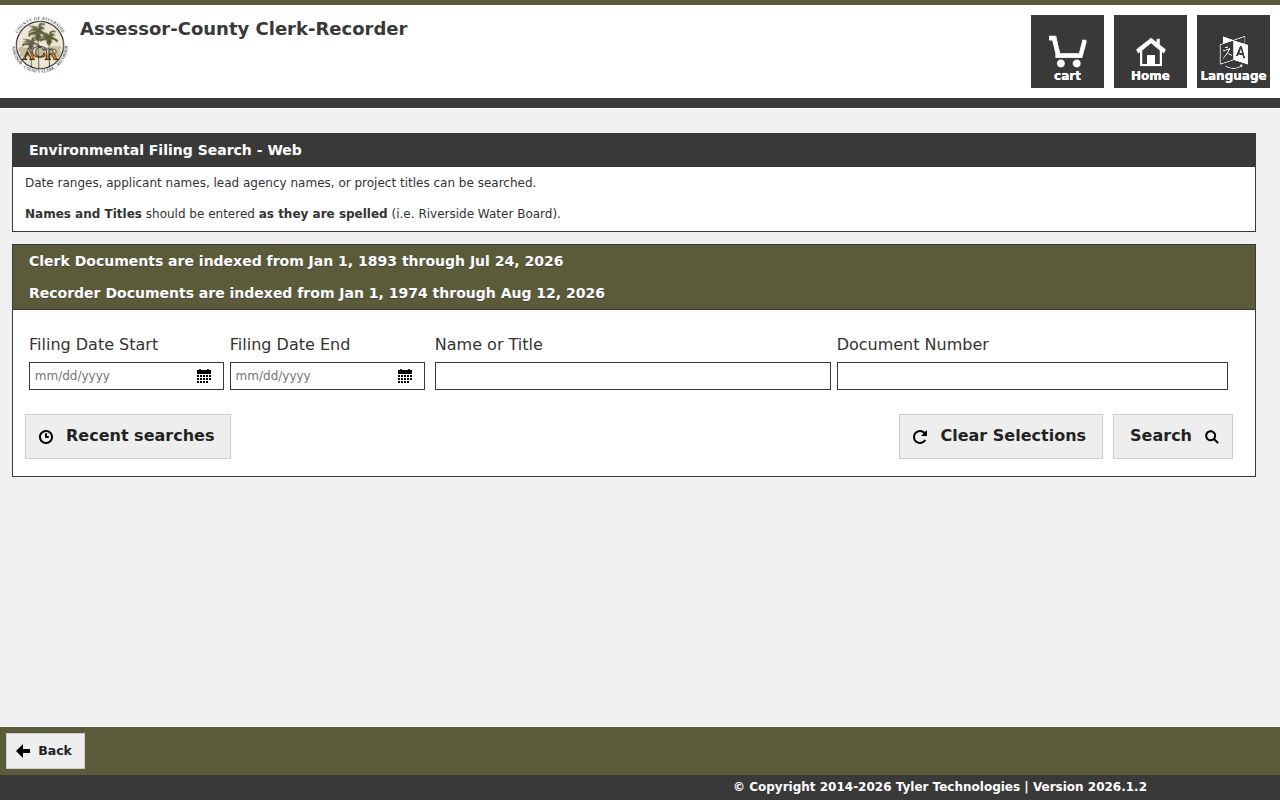
The two La Quinta coverage dates are a local research trap. Label the source series before using a date as a historical cutoff for previous residents.
La Quinta Records Before 1893
Riverside County formed in 1893 from portions of San Bernardino and San Diego counties. A La Quinta land or person trail before 1893 may therefore shift custodians. Keep the legal description, tract or map identity, and date while checking which predecessor county covered the La Quinta land at that time. Do not assume a Sacramento state archive holds the original simply because the record is old.
Start with ACR and the Robert J. Fitch County Archives for La Quinta material. Then use the FamilySearch Catalog for Riverside County deeds, probate, vital, naturalization, and cemetery categories, noting any image or affiliate-library restriction. The title and year of a catalog item are not proof that a named La Quinta person appears inside it.
La Quinta Address History and Legal Descriptions
La Quinta addresses developed across rural settlement, the Cove and Village, resort landscapes, planned subdivisions, gated golf communities, private streets, and condominium units. A modern La Quinta street name or number may not match an older deed or directory entry. The legal description is the stable bridge. Save tract, lot, block, map book and page, metes-and-bounds language, and APN wherever the La Quinta record supplies them.
- Chain of title
- A connected sequence of transfers for one La Quinta parcel, checked by names, dates, and legal description.
- Grantor
- The party conveying an interest in a deed or other instrument.
- Grantee
- The party receiving the interest. An earlier seller may appear as a prior grantee.
- Legal description
- The title language that can remain useful when street labels and ZIP identities change.
A postal La Quinta address can also sit outside the incorporated boundary. Check Vista Santa Rosa’s La Quinta sphere-of-influence status before assigning a city record to the parcel.
La Quinta Address History Through Surveys
The city’s La Quinta Historic Resources Surveys can provide a stronger local house-history layer than a generic directory. The 1997 survey found 72 eligible sites. The 2006 survey added 183 surveyed sites, with 109 eligible. A 2012 consolidation improved access, and the 2022-23 La Quinta update provides a context statement, era-neighborhood maps, survey tables, DPR forms, and proposed districts.
La Quinta survey material can identify construction era, style, tract or development period, architect, builder, and significant associated people. It may not name every occupant. Pair it with digital permit files, assessor-recorder dates, newspaper pages, Calisphere, UC Riverside, library material, Museum records, and Historical Society expertise. The city’s own La Quinta research method is a useful model for tracing previous residents.
La Quinta permit records date an addition, conversion, or project. They do not turn an applicant or contractor into proof of household residence.
La Quinta Census and Directory Trail
The La Quinta household layer is separate from the deed chain. NARA census schedules through 1950 show a household at an enumeration place. Regional directories may show a La Quinta address, phone, household principal, or business clue for a particular year. Newspapers can connect a name to a move, marriage, death, event, or organization. Each source needs its own citation and a check for place.
Search the library catalog for Coachella Valley, Indio, Palm Springs, Riverside County, telephone, city directory, and criss-cross. Then pair 1930, 1940, and 1950 evidence with the matching La Quinta census. After 1950, bridge with deeds, permits, newspapers, yearbooks, and whatever regional volume the La Quinta library confirms. OCR is an index, not the page image.
The collection details and sample-entry method are covered on the La Quinta city directory collections page. The focus here stays on one address moving backward.
Note: Census geography can use a township or precinct that differs from a current La Quinta street address.
La Quinta Address History to Probate
La Quinta probate petitions, notices, representatives, and heirs can explain an owner’s endpoint or identify a family connection. Riverside’s nearly complete Indio probate coverage begins in July 1994, though sealed attachments, confidential details, copy fees, and clerk access rules still apply. An obituary may add spouse, children, former cities, service location, and a last known La Quinta community.
Do not treat a family-submitted obituary as a civil certificate. Confirm the relationship or date with probate, a vital record, deed, census schedule, or another newspaper page. If the search concerns a La Quinta heir, write the legal description and decedent’s name beside every clue so a shared name does not move the trail to another parcel.
La Quinta Address History and Sanborn Maps
No authoritative La Quinta-specific Sanborn fire-insurance map edition was located. Sanborn coverage focused on built-up places, and early La Quinta included rural, agricultural, desert, and resort settlement. The absence of a map title is meaningful but does not prove that a house or business did not exist.
Use La Quinta permits, aerials, tract maps, and historic-survey forms as local substitutes. The Library of Congress Sanborn search guide explains advanced search and digitization limits. Do not use a nearby Riverside or Los Angeles sheet as if it covered a La Quinta parcel.
Past La Quinta Households in Directories
Previous residents are not the same as previous owners. Use a La Quinta address section, census schedule, obituary, yearbook, newspaper, or historical survey to look for a household. A deed chain shows conveyance. A directory shows what its publisher listed. A permit shows a project. The distinctions are what make a La Quinta past-residents result useful rather than overstated.
Voter files can sometimes support a historical La Quinta residence question only through a qualified statutory request. California’s statewide request process requires a permitted purpose, applicant and beneficiary details, geography or file choices, an identification copy, signature, and fee. It is not a shortcut to a private La Quinta household list.
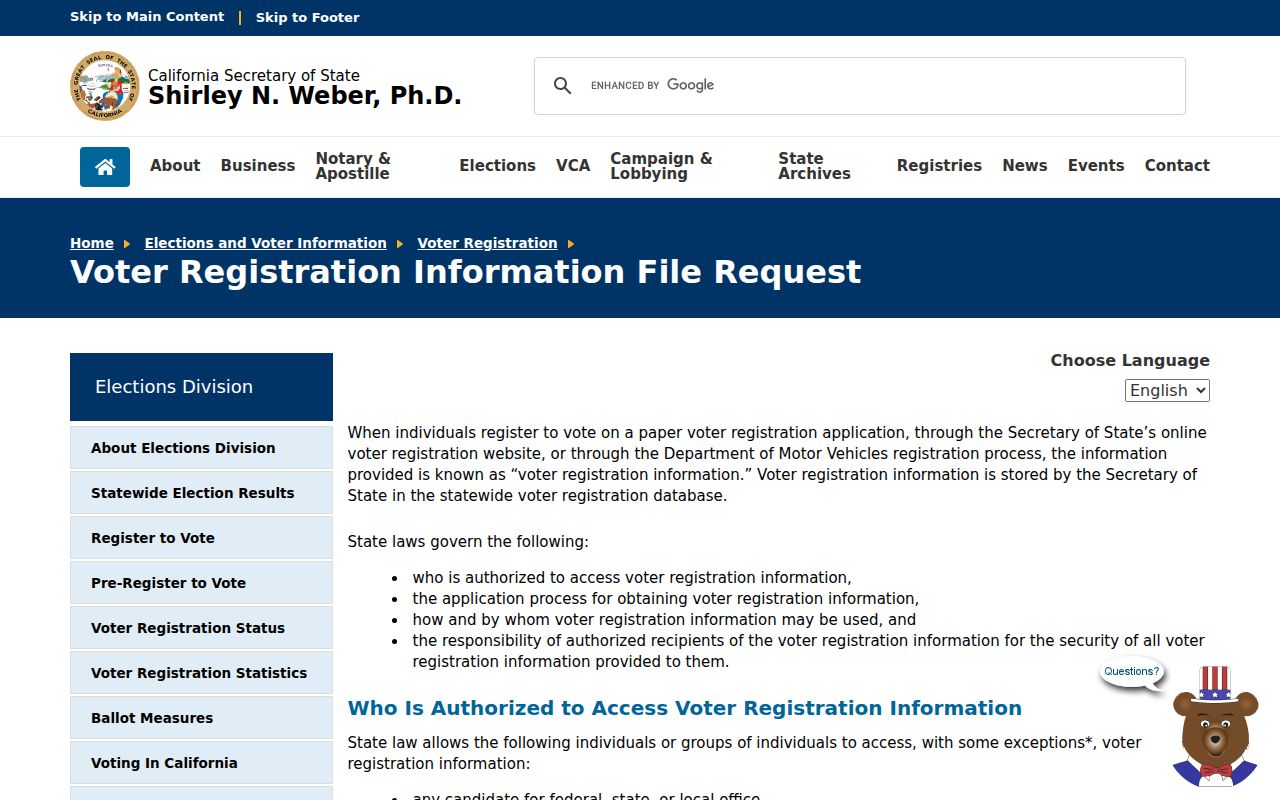
The La Quinta voter-file request image shows why a historical address clue still has to travel through a legal access channel.
Lawful house history. Research La Quinta past residents for family history, property history, and personal curiosity. Do not use a La Quinta address trail to stalk, harass, intimidate, or harm a living person.
Once the La Quinta source and date are clear, cite the exact page, document, case, or form. A previous residents search is strongest when uncertainty is recorded instead of hidden.
Note: A La Quinta previous-residents result is strongest when the source, page, and date stay attached to the household clue.